
What Are the Latest Trends in Green Wall Design?
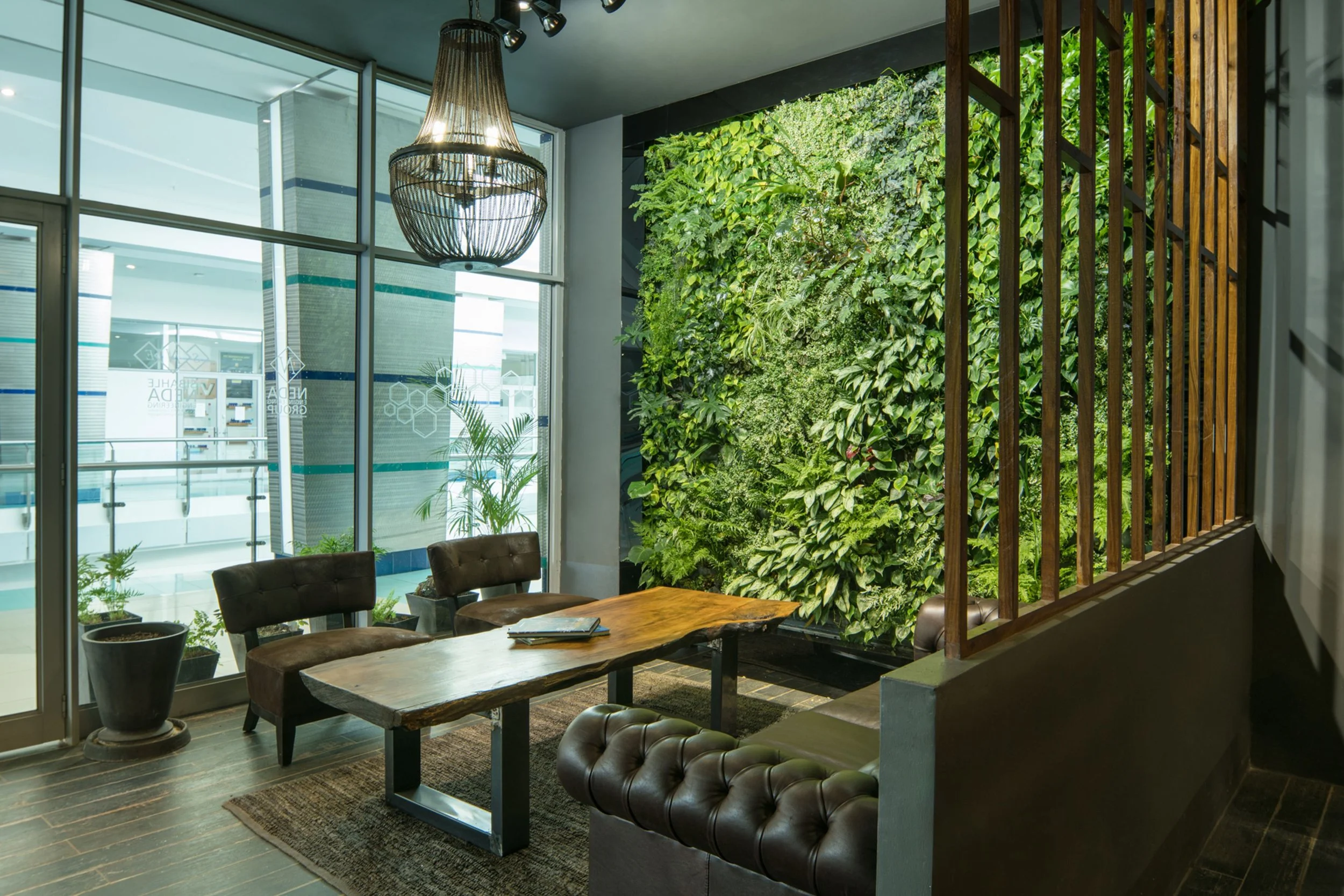
Living Wall Office Lobby
Green wall design has left the "nice-to-have amenity" category. It's moved into something closer to infrastructure. Architects are specifying living walls at the concept phase instead of bolting them on after the fact. Fast-growing tech companies are using living plant walls as a retention tool. Universities are treating greenery as a wellness investment rather than decor.
If you've searched "what are the latest trends in green wall design," you're likely noticing the same thing we are at lily scott: the vertical garden has quietly become one of the most versatile tools in commercial design.
This shift isn't just aesthetic. It's driven by three converging forces: research on biophilic design and human wellbeing, engineering advances that make living walls and moss walls easier to install and maintain, and a cultural push for spaces that feel calming and restorative.
Below, we break down where green wall design is headed in 2026; from airport lounges to hypergrowth tech offices. Here's what it means if you're considering a plant wall, moss wall, or living greenery for your own space.
Living Plant Walls Are Calming the Modern Traveler in Airport Lounges
Airports are stressful by design due to tight timelines, crowded terminals, recycled air, and fluorescent lighting. It's no surprise that airport authorities and lounge operators are leaning hard into biophilic design to counteract all of it. The living plant wall has become one of their favorite tools.
A living green wall in a departure lounge does more than fill empty wall space.
Research on biophilic design consistently shows that exposure to natural elements like live foliage, natural light, organic texture, water fountain all have been proven to lower cortisol, reduce perceived stress, and improve mood in high-stimulation environments.
For travelers dealing with delays, layovers, or the general anxiety of air travel, a lush indoor plant wall functions almost like a decompression chamber. It gives the eye somewhere soft to land in a terminal built entirely of hard surfaces.
Why airports are investing in living plant walls right now:
Stress reduction: biophilic exposure measurably lowers cortisol and perceived stress in high-stimulation environments like terminals and gates.
Brand moments: a striking living wall becomes a landmark within the terminal — the kind of visual anchor travelers photograph and share, extending the airport's brand beyond its walls.
Premium positioning: lounges use a vertical garden near seating or bar areas to signal a shift from purely functional to genuinely restorative design.
Built for the environment: installations have to survive high foot traffic, fluctuating HVAC conditions, and minimal on-site maintenance access — which is exactly what highly engineered living walls are design to do.
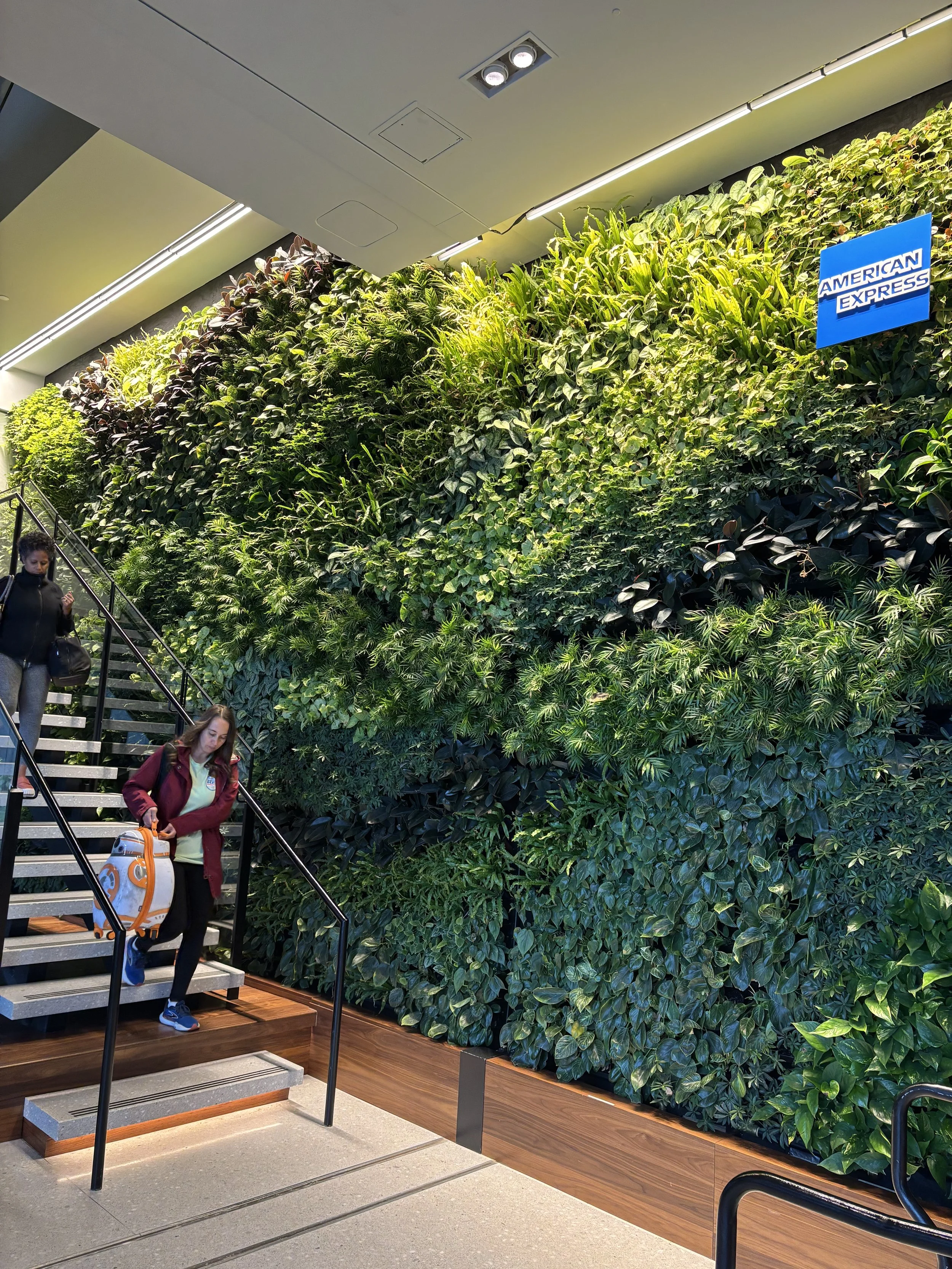
American Express Lounge Living Wall
Moss Walls in Office Lobbies and Conference Rooms: Sound Control Meets Biophilia
If there's one trend defining commercial interiors in 2026, it's the moss wall, specifically, its use as a functional acoustic solution rather than pure decoration.
Open-plan offices and glass-walled conference rooms look sleek, but they're notoriously bad for sound. Hard surfaces bounce noise around, making it difficult to hold a private call or focus during a meeting.
This is where preserved moss earns its place in the specification. Its irregular, porous structure naturally traps and diffuses sound waves, and that absorption is strongest in the mid-to-high frequency range — exactly where human speech lives.
In practical terms: a moss wall behind a reception desk or lining a conference room doesn't just look intentional. It measurably quiets the room.
Why moss walls are the office acoustic trend to watch:
Real acoustic performance: many moss wall panels achieve a Noise Reduction Coefficient (NRC) between 0.6 and 0.9, absorbing roughly 60–90% of the sound energy that hits them.
Zero maintenance: no water, soil, or direct light required, making preserved moss ideal for interior conference rooms and elevator lobbies with no natural light source.
Branding built in: moss wall art can incorporate logos, company shapes, and custom patterns, so the wall doubles as a design feature and an acoustic panel.
Everywhere from law firms to tech huddle rooms: the combination of acoustic performance and low upkeep is why moss plant walls are showing up in breakout rooms, wellness rooms, and reception areas alike.
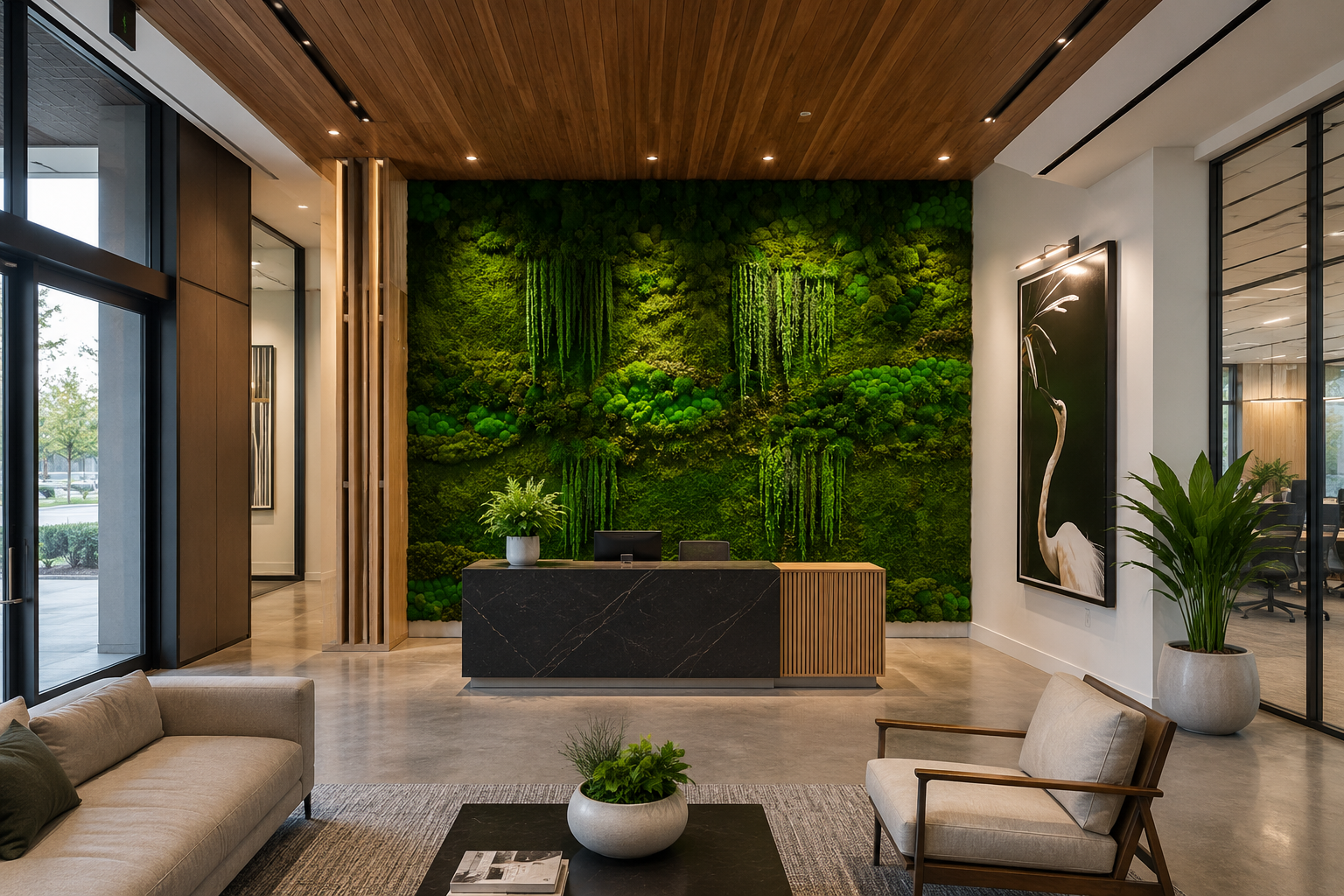
Preserved Moss Wall Design- Office Environment
Living Plant Walls in Tech Offices: Supporting Teams Through Growth and Burnout
Fast-growing tech companies run on a different metabolism than most industries due to compressed timelines, aggressive hiring targets, long hours, and constant turnover. That pressure forces facilities and People teams to treat the physical workspace as a genuine retention lever, not just square footage. Living walls have become one of the more visible responses.
The logic is straightforward: in a labor market where engineering and product talent can leave for a marginally better offer, the office itself has to help make the case for staying. A living plant wall in a breakout room or a moss wall lining a wellness pod signals that a company is thinking about its people's day-to-day experience, not just their output.
It's also a practical fit for how tech companies actually operate. They scale and relocate quickly, and lightweight, modular green wall systems can be installed fast enough to keep pace with a company that might double its footprint in a year.
Why tech offices are driving this trend:
High hire rate, high attrition: hypergrowth companies are hiring and losing employees simultaneously, and workplace experience has become a real differentiator in offer acceptance and retention.
Long-hours culture: teams pulling extended hours need restorative, low-stimulation spaces — a living green wall in a lounge or focus room gives burned-out employees somewhere calming to reset.
Recruiting tool: candidates touring the office notice biophilic design the same way they notice free food or a good coffee bar — it signals investment in daily experience.
Built for fast-moving companies: tech offices relocate and expand often, and lightweight, modular living wall and moss wall systems can be designed, fabricated, and installed on the compressed timelines that hypergrowth demands.
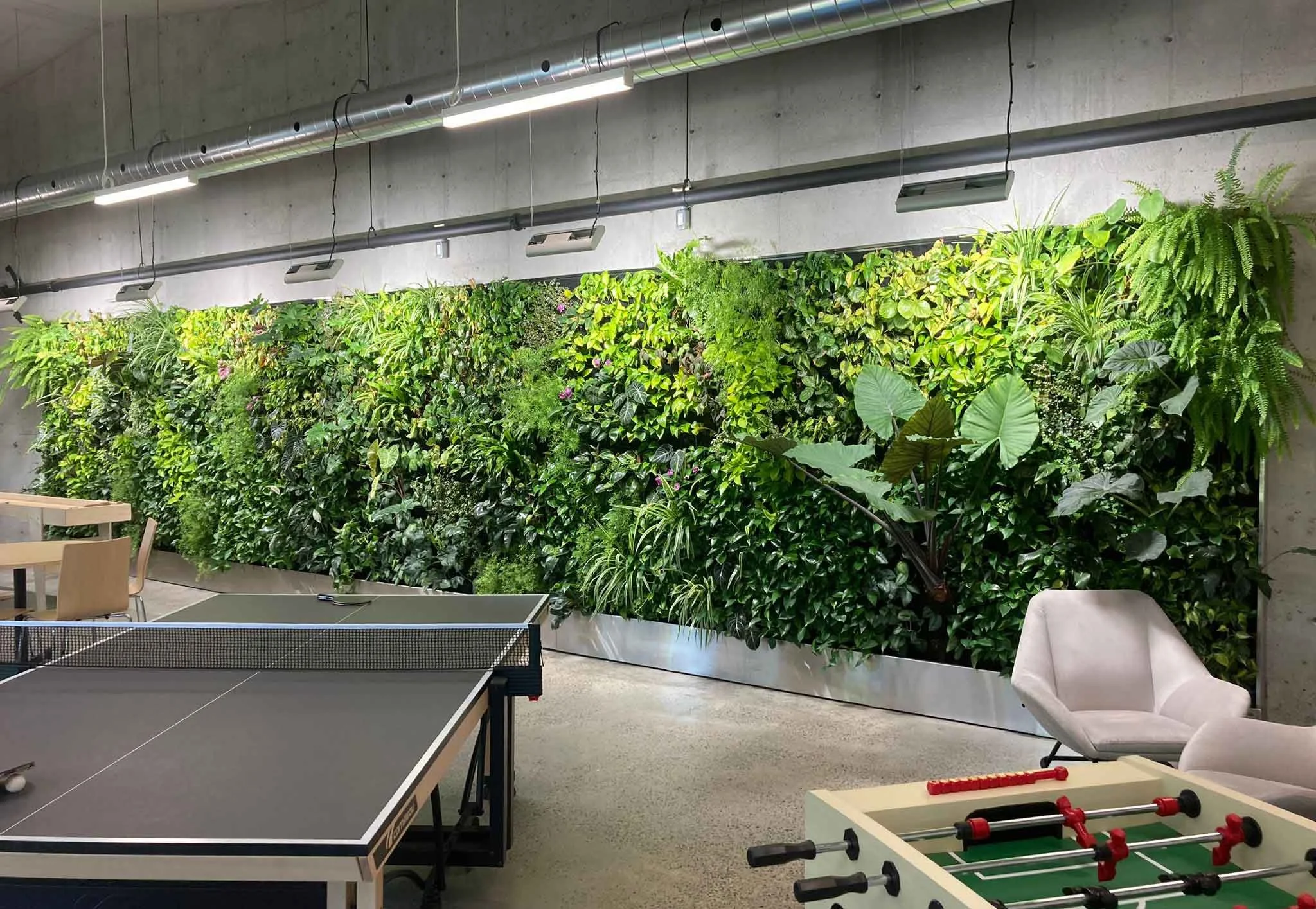
Tech Office Living Wall
Living Plant Walls in Higher Education: Designing Campuses for Wellbeing
Universities are under enormous pressure to support student mental health, and campus design has become part of that response. Living plant walls are showing up in libraries, student unions, dining halls, and residence hall lobbies — part of a broader effort to make campus spaces feel restorative rather than purely institutional.
The research rationale mirrors what's driving green walls in airports, offices, and tech campuses. Biophilic elements reduce stress and support cognitive performance — both of which matter in environments built around studying, testing, and long hours indoors.
Higher education projects also tend to showcase a wider range of green wall design than corporate spaces do. Campuses mix indoor and semi-outdoor spaces and often involve retrofitting older buildings with irregular wall geometry.
Why campuses are investing in living walls:
Student wellbeing: a living green wall in a study lounge or library atrium gives students a visual break during long study sessions, supporting focus and reducing stress.
Recruitment and retention: campus planners increasingly view greenery as a recruitment tool because prospective students and families notice these spaces on tours.
A proving ground for design: modular, lightweight panel systems can be custom-fit to curved walls, columns, and awkward atrium spaces without structural reinforcement, making campuses some of the most ambitious canvases for large-scale living wall design.
High-visibility placement: student centers and admissions buildings are increasingly where universities put their most ambitious installations.
The Bottom Line
Green wall design in 2026 is defined by purpose, not decoration. Every example above — airports, offices, tech campuses, higher ed — uses living walls or moss walls to solve a specific problem, and lightweight construction plus automated irrigation is what makes it achievable at scale.
Quick recap of where the trend is headed:
Airports: living plant walls as stress-reducing, photogenic landmarks in lounges and terminals. Offices: moss walls specified for acoustic performance, not just looks. Tech companies: living walls as a retention and recruiting tool in high-turnover, high-hours cultures. Higher ed: living walls supporting student wellbeing and campus recruitment. Underneath it all: lightweight construction and automated, remote-monitored irrigation making all of the above achievable at scale.
Lily Turner is a biophilic designer and living wall specialist with experience across the United States as a design-build practitioner. She works closely with architects, designers, and contractors to identify the right living wall approach for their budget, design parameters, and project scale. Lily brings a uniquely integrated perspective to living architecture; one that bridges design, planning, and development to recognize the social, environmental, and economic value of her systems. She can be reached at lily@lilyscottdesigns.com or www.lilyscottdesigns.com