
The Top 10 Living Walls in New York City
New York City may be the world's most famous concrete jungle, but a quiet green revolution is climbing its walls. Living walls, also called vertical gardens, green walls, or plant walls, are permanent installations that mount living plants directly onto vertical surfaces, both indoors and outdoors. Across Manhattan and Brooklyn, architects, interior designers, and sustainability-forward brands are embracing these installations as powerful tools for air purification, acoustic comfort, urban heat reduction, and sheer visual impact.
From the World Trade Center district to Williamsburg, from Lincoln Center to NYU, New York City's vertical gardens and green walls are redefining what sustainable urban architecture looks like. Here are the ten living plant wall installations every design lover, sustainability advocate, and NYC explorer needs to know about.
In this guide:
1. Liberty Park Plaza — Lower Manhattan, World Trade Center area
2. Innisfree Flagship Store — Midtown Manhattan
3. Devoción Coffee — Williamsburg, Brooklyn
4. Lincoln Center — Upper West Side
5. The Food Hall at 151 W 42nd St — Midtown
6. 152 Elizabeth Street — Nolita, Manhattan
7. One Manhattan Square — Lower East Side
8. 685 Third Avenue Pocket Park — Midtown East
9. NYU School of Global Public Health — Greenwich Village
10. 60 Wall Street (Coming Soon) — Financial District
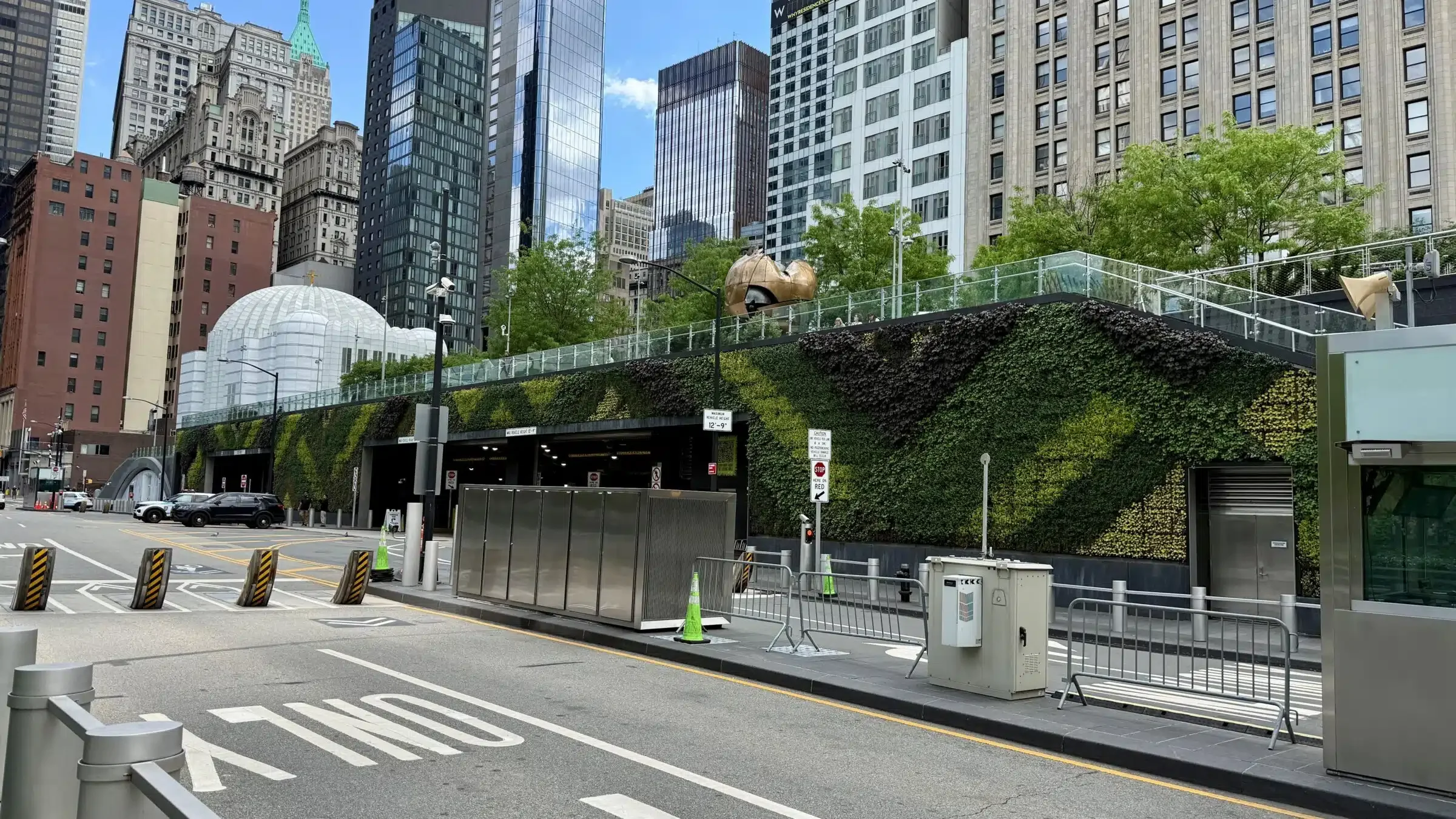
Modular Cold Climate Living Wall- Lower Manhattan
Liberty Park Plaza Exterior Living Wall
📍 Liberty Park, near the World Trade Center, Lower Manhattan, New York, NY
Proprietary Cold-Climate Technology
When it comes to outdoor living walls in New York City, few installations face a more demanding environment than the Liberty Park Plaza exterior green wall. Positioned steps from the World Trade Center, one of the most visited NYC landmarks and one of the most architecturally significant sites in the country, this vertical garden is an engineering achievement as much as a design statement.
What makes this particular project extraordinary is the proprietary cold-climate technology, a system purpose-built for the harsh freeze-thaw cycles, sub-zero wind chills, and dramatic seasonal temperature swings that define outdoor life in the northeastern United States. Most exterior green walls in temperate climates struggle or fail entirely in a New York winter. This cold-climate system is specifically engineered to prevent that, keeping the vertical garden lush and healthy even in January.
Why this living wall matters for NYC's green architecture scene
The Liberty Park location places this outdoor plant wall in conversation with millions of visitors annually. For anyone exploring Lower Manhattan's revitalized public spaces or searching for sustainable architecture near the World Trade Center, this green wall is a must-see example of how biophilic design principles can be integrated into some of the most high-stakes urban environments on earth.
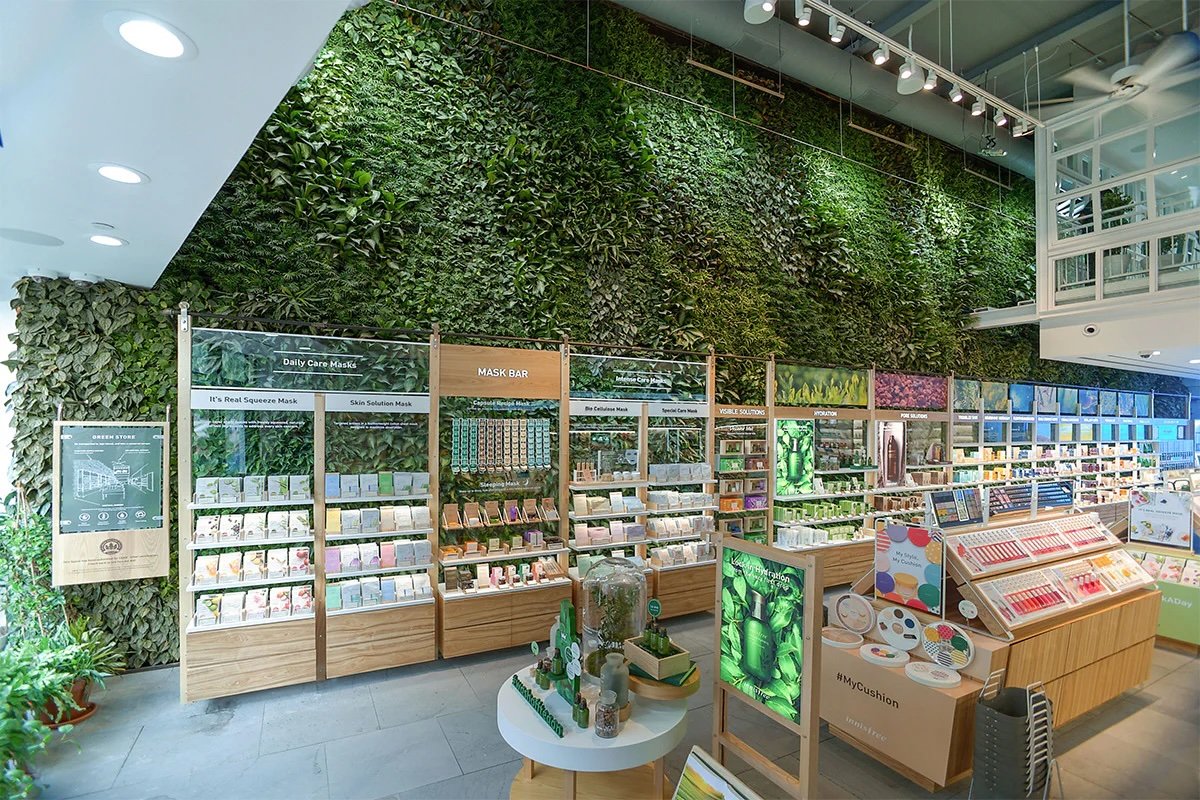
Plastic Tray Living Wall- Union Square
Innisfree Flagship Store Living Wall
📍 Midtown Manhattan, New York, NY
Modular Plastic Tray System · 1,824 sq ft
At 1,824 square feet and nearly 10,000 individual plants, the living plant wall inside Innisfree's New York City flagship store is one of the largest and most spectacular retail vertical gardens in Manhattan. Korean beauty brand Innisfree built its entire identity around the volcanic landscapes and clean natural ingredients of Jeju Island , so when it came time to design their American flagship, a sweeping two-story indoor living wall wasn't just décor. It was a brand philosophy rendered at architectural scale.
The wall uses a modular plastic tray system, a popular plug and play system used for commercial green wall installation nationwide. Individual planting trays slot into a structural frame, allowing sections to be swapped out for maintenance without disturbing the broader installation. For a retail environment where the wall must look pristine every single day of the year, any easy replacement design is critical. The result is a towering surface of dense, layered greenery that stops Midtown pedestrians in their tracks, a living, breathing counterpoint to the steel-and-glass environment outside.
One of the largest retail vertical gardens in NYC
With nearly 1,800 square feet of planted surface area and close to 10,000 plants, the Innisfree wall is a serious contender for the title of largest indoor living wall in a New York City retail space. For anyone researching commercial plant wall installations in Manhattan, or simply looking for one of the most visually stunning vertical gardens in NYC, this flagship is worth a visit.
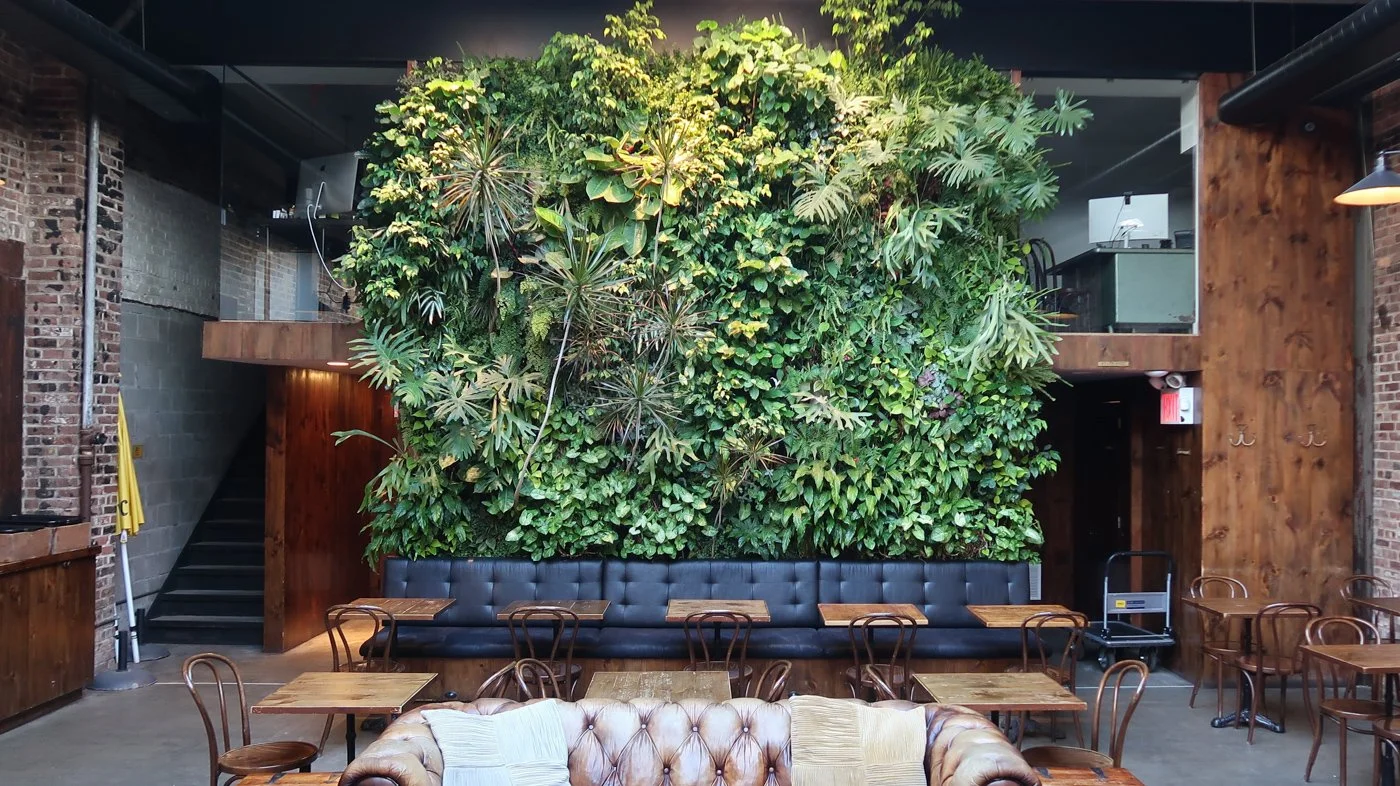
Felt-based Geoponic Living Wall
Devoción Coffee — Williamsburg Living Wall
📍 Williamsburg, Brooklyn, New York, NY
Felt-Based Geoponic System
Walk into Devoción's Williamsburg café and the living wall hits you before the coffee does. Stretching from floor to ceiling and bathed in natural light from the space's dramatic skylight, this indoor vertical garden in Brooklyn is one of the most photographed plant walls in Brooklyn, and for good reason. It's also one of the most technically sophisticated, built on a felt-based geoponic system where plant roots grow directly into engineered felt substrate rather than conventional soil or growing media. This system is my personal favorite and shows the lowest plant replacements in the green wall industry.
Geoponic systems represent a newer generation of living wall technology, prized for water efficiency, lightweight construction, and the ability to support an extraordinarily diverse palette of plant species at varying moisture levels within the same installation. Tropical foliage, ferns, and flowering plants can all coexist on the same felt panel, creating a richly layered, painterly surface that looks less like a planted wall and more like a living artwork.
Biophilic design meets specialty coffee culture in Brooklyn
Devoción is known throughout the NYC specialty coffee scene for obsessive attention to freshness and sourcing. The Williamsburg green wall installation feels entirely consistent with that philosophy. For visitors searching for living walls in Brooklyn, stunning vertical gardens near Williamsburg, or simply one of the most beautiful café interiors in New York, Devoción is unmissable.
The felt-based geoponic system supports a far broader range of plant species than conventional tray or soil-based living wall systems — giving this Brooklyn café one of the most botanically diverse vertical gardens in New York City.
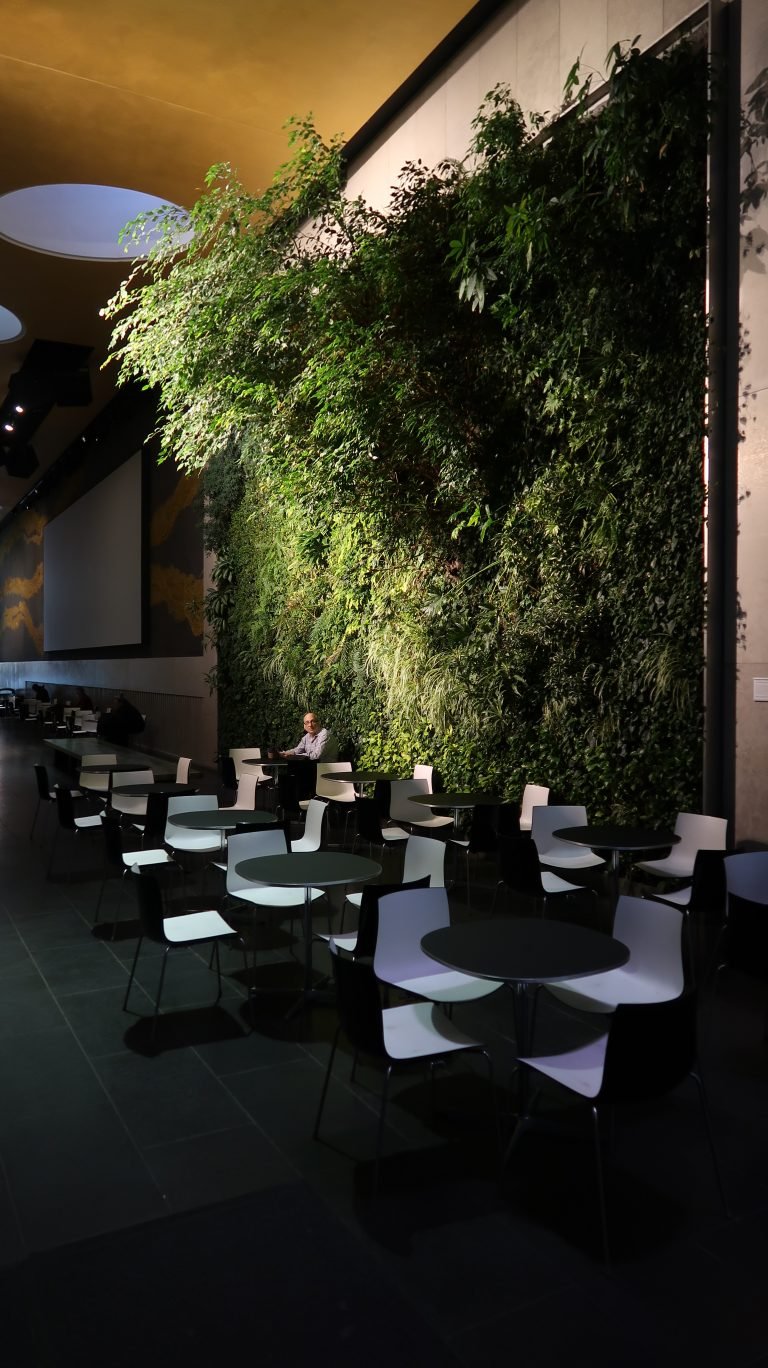
Felt-based Geoponic Living Wall
Lincoln Center Living Wall
📍 61 W 62nd St, Upper West Side, New York, NY 10023
Felt-Based Geoponic System
Lincoln Center for the Performing Arts is one of New York City's most iconic cultural landmarks — home to the Metropolitan Opera, New York Philharmonic, and New York City Ballet, and a cornerstone of the Upper West Side's architectural identity. The living wall at 61 West 62nd Street brings a powerful organic counterpoint to this celebrated campus, using a felt-based geoponic vertical garden system to soften the modernist geometry of the surrounding buildings with layers of living plant life.
In high-profile cultural environments, living green walls need to do more than simply exist — they need to hold up under constant scrutiny and foot traffic from thousands of daily visitors. The geoponic felt system installed here delivers the botanical depth required to stand alongside world-class architecture, supporting a diverse, layered planting composition that evolves with the seasons.
Green walls and performing arts: a natural pairing
Research on biophilic design in public spaces consistently shows that exposure to living plant material reduces stress and enhances mood, making a vertical garden at Lincoln Center a quietly functional addition as well as a beautiful one. For those exploring living plant walls near NYC cultural landmarks, the installation at 61 West 62nd Street is well worth seeking out.
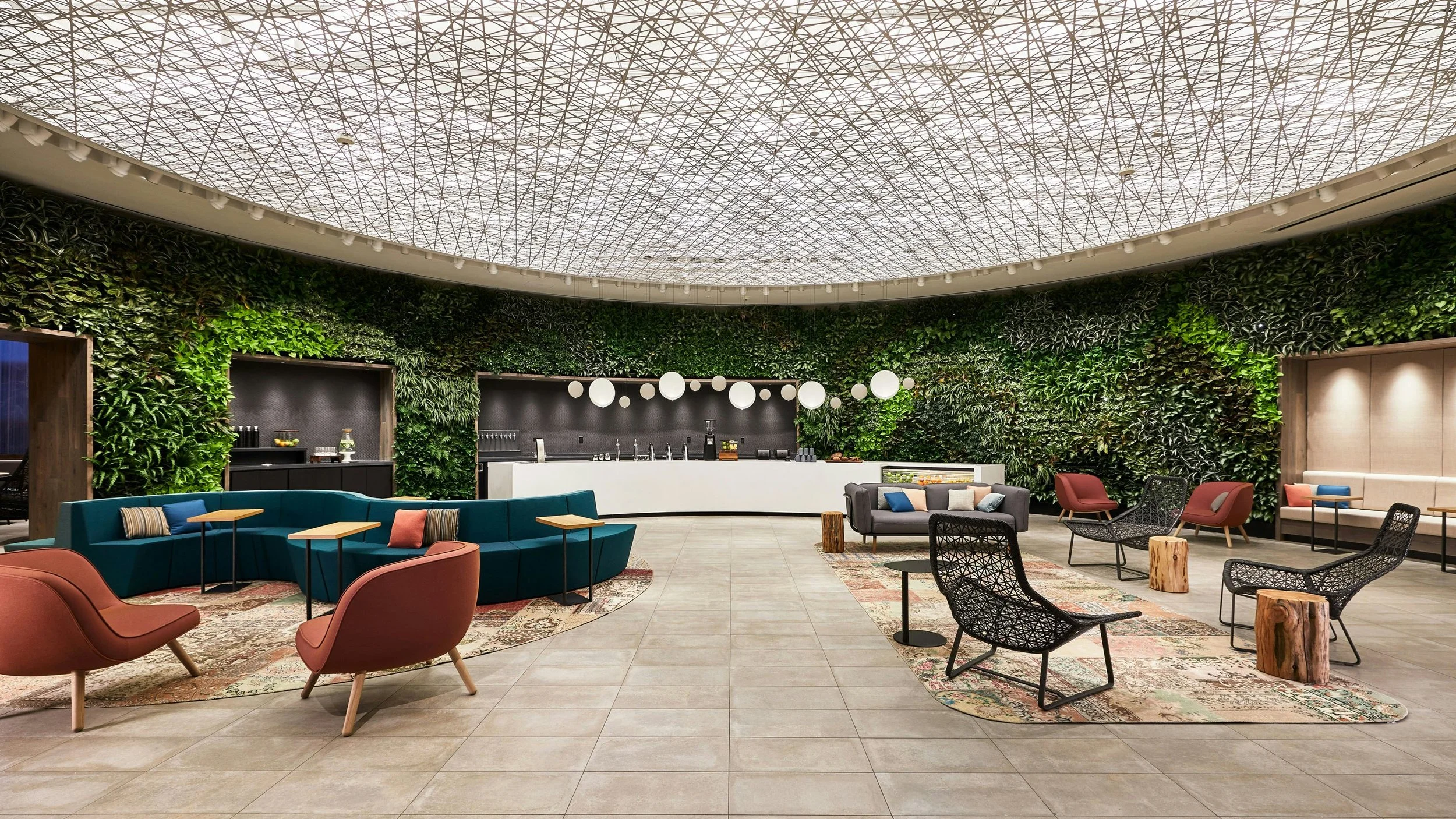
Plastic Tray Living Wall- Manhattan
The Food Hall Living Wall — 151 W 42nd Street
📍 151 W 42nd St, Midtown Manhattan, New York, NY 10036
Modular Plastic Tray System
Times Square and its surrounding blocks aren't typically associated with tranquility or natural beauty, which is precisely what makes the living plant wall at the food hall at 151 West 42nd Street such a compelling surprise. Installed using a modular plastic tray system, this indoor vertical garden in Midtown Manhattan delivers a burst of grounding greenery to one of New York City's highest-footfall dining destinations, just steps from the Theater District and Bryant Park.
In a busy food hall environment, a green wall installation is both aesthetic and functional. Living plant walls naturally improve air quality by filtering particulates and releasing oxygen, while the dense mass of foliage provides measurable acoustic dampening, softening the ambient noise that builds in high-energy dining spaces. The plastic tray system allows the facility team to maintain the wall efficiently, replacing individual sections without shutting down adjacent areas. This is critical because the plastic tray design does yield higher plant replacement rates.
One of the most inspiring green walls in New York City
Given its location near Bryant Park, Grand Central Terminal, and the Theater District, the 151 West 42nd Street plant wall is one of the most accessible living wall installations in NYC for visitors and commuters alike. Whether you're searching for vertical gardens in Midtown Manhattan or simply looking for a moment of calm in the heart of Times Square, this green wall delivers.
Positioned steps from Times Square, Bryant Park, and Grand Central Terminal, this Midtown food hall living wall may be the most centrally located vertical garden installation in all of New York City.
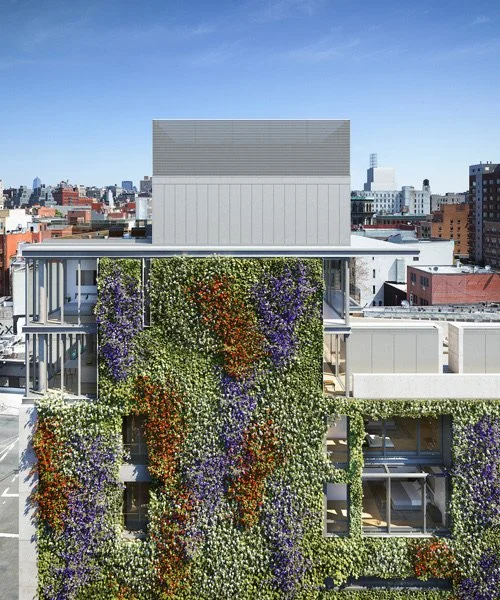
Exterior Geoponic Living Wall- Manhattan
152 Elizabeth Street — New York's Largest Residential Green Wall
📍 152 Elizabeth St, Nolita, Manhattan, New York, NY 10012
Architect: Tadao Ando · Largest Residential Green Wall in New York State
In the heart of Nolita, 152 Elizabeth Street is home to what is widely considered New York State's largest residential green wall. Designed by legendary Japanese architect Tadao Ando, known for his meditative use of raw concrete and natural light, the living wall spans the entire height of the building, creating a breathtaking vertical garden that rises stories above one of downtown Manhattan's most design-conscious neighborhoods.
What distinguishes this residential living wall in NYC from typical green building features is its sheer ambition. Rather than a modest decorative strip of plantings, the Elizabeth Street wall is a full-facade commitment to biophilic architecture, a bold statement that residential buildings can and should be living, breathing parts of their urban ecosystem.
Where luxury residential design meets sustainable living
For those exploring green architecture in downtown Manhattan, sustainable luxury residential buildings in New York, or simply the intersection of iconic design and ecological thinking, 152 Elizabeth Street is essential. It demonstrates that vertical garden systems belong not just in corporate lobbies and retail flagships, but on the residential facades of some of New York's most architecturally significant buildings.
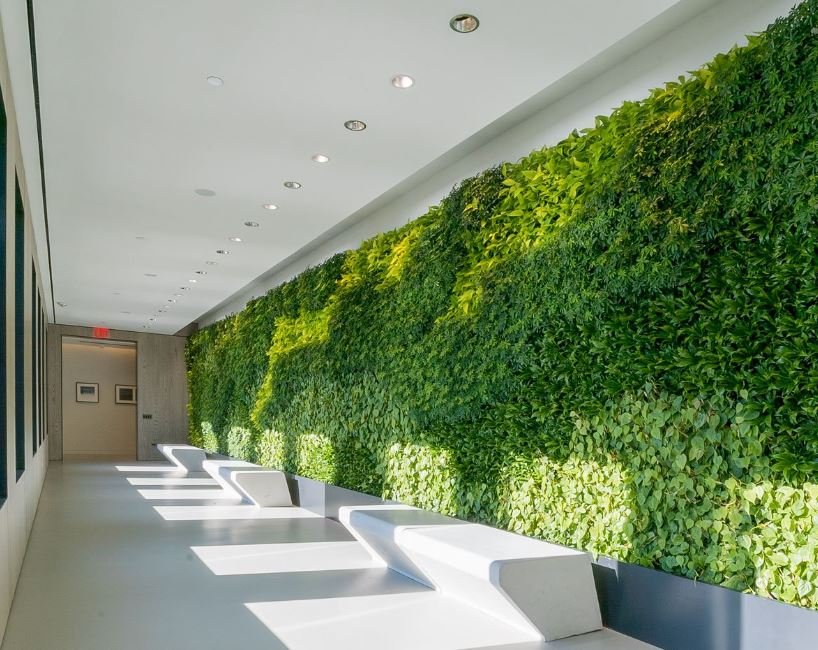
Interior Plastic Tray Living Wall- Manhattan
One Manhattan Square Living Wall
📍 One Manhattan Square, Lower East Side, Manhattan, New York, NY
One Manhattan Square is a striking luxury residential skyscraper on the Lower East Side that has made biophilic design central to its identity, and the living wall is the crown jewel of that commitment. With over 10,000 individual plants, this indoor vertical garden creates a sweeping natural environment that gives residents a genuine sense of immersion in living greenery, even dozens of floors above street level.
The scale of this plant wall installation is what sets it apart from most residential green wall systems in New York. The result is a lush, multi-species wall that serves as a genuine wellness amenity for building residents.
A new standard for green amenities in NYC residential towers
As luxury residential buildings in New York City compete on the quality of their wellness and design amenities, living walls are emerging as a key differentiator. One Manhattan Square's installation — with its thousands of plants and meticulous design — sets a high bar for what vertical garden systems in NYC residential towers can achieve.
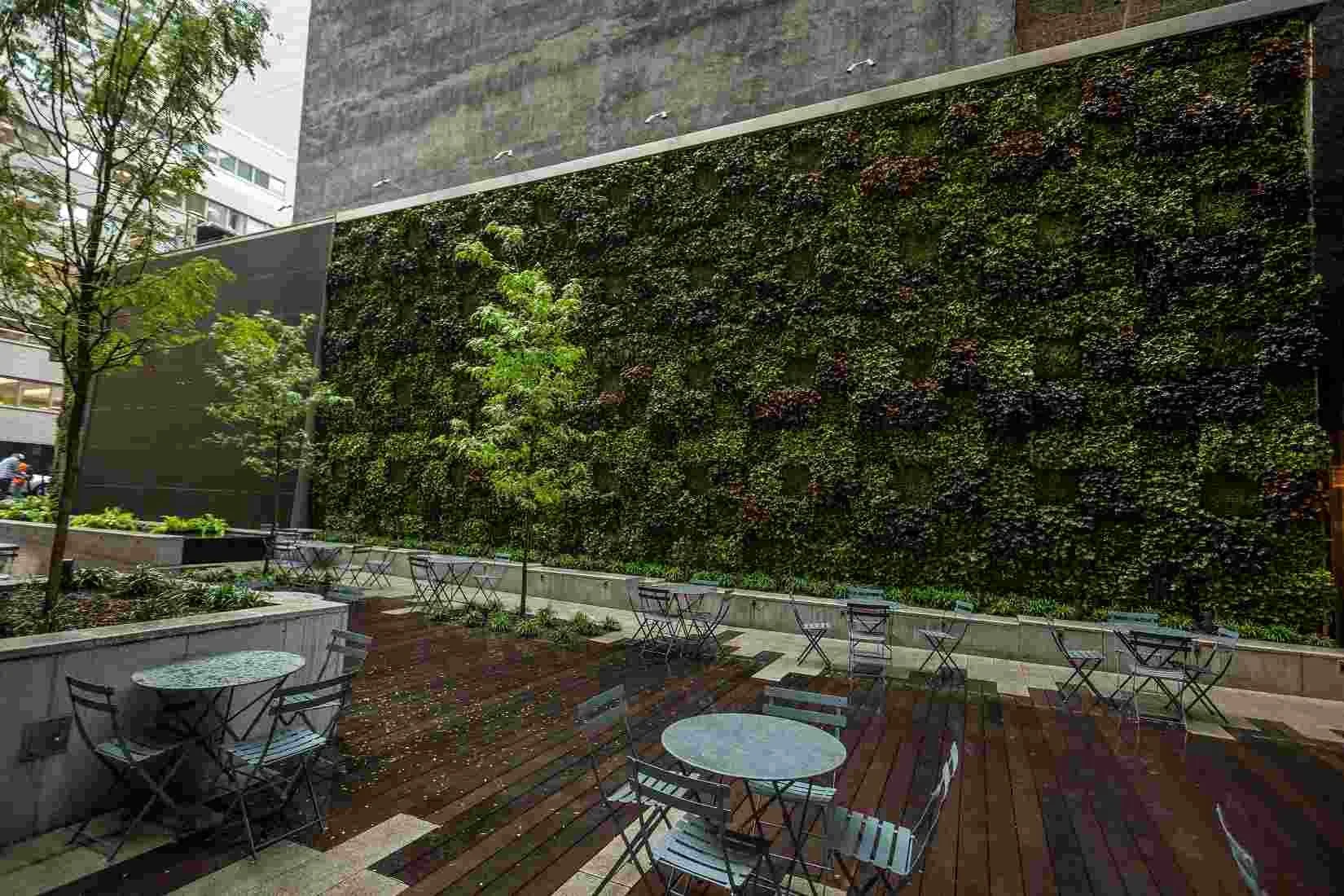
Exterior Living Wall- Manhattan
685 Third Avenue Pocket Park Living Wall
📍 685 Third Ave, Midtown East, Manhattan, New York, NY 10017
In the dense office corridor of Midtown East, the living wall at the 685 Third Avenue Pocket Park offers something increasingly rare in this part of Manhattan: a genuine moment of natural calm. This outdoor green wall is the centerpiece of a carefully crafted urban oasis — a pocket park that provides workers, commuters, and passersby with direct access to living plant material in one of New York City's most relentlessly built-up neighborhoods.
The wall is planted with a variety of species selected specifically for the microclimate conditions of this particular Midtown block — accounting for wind exposure, reflected heat from surrounding buildings, and seasonal light variation. The result is a vertical garden that thrives in its specific urban context, creating a lush, vibrant tapestry of greenery that changes character through the seasons.
Pocket parks and living walls: urban wellness at street level
The 685 Third Avenue installation is a compelling example of how green wall design can be used not just in buildings but in the public realm itself. For anyone researching outdoor living walls in Midtown Manhattan, sustainable urban design in New York, or the role of vertical gardens in improving street-level environments, this pocket park is a must-visit.
Designed specifically for the microclimate of a dense Midtown block, this John Mini Distinctive Landscapes installation proves that outdoor vertical gardens can thrive even in the most challenging urban environments in New York City.
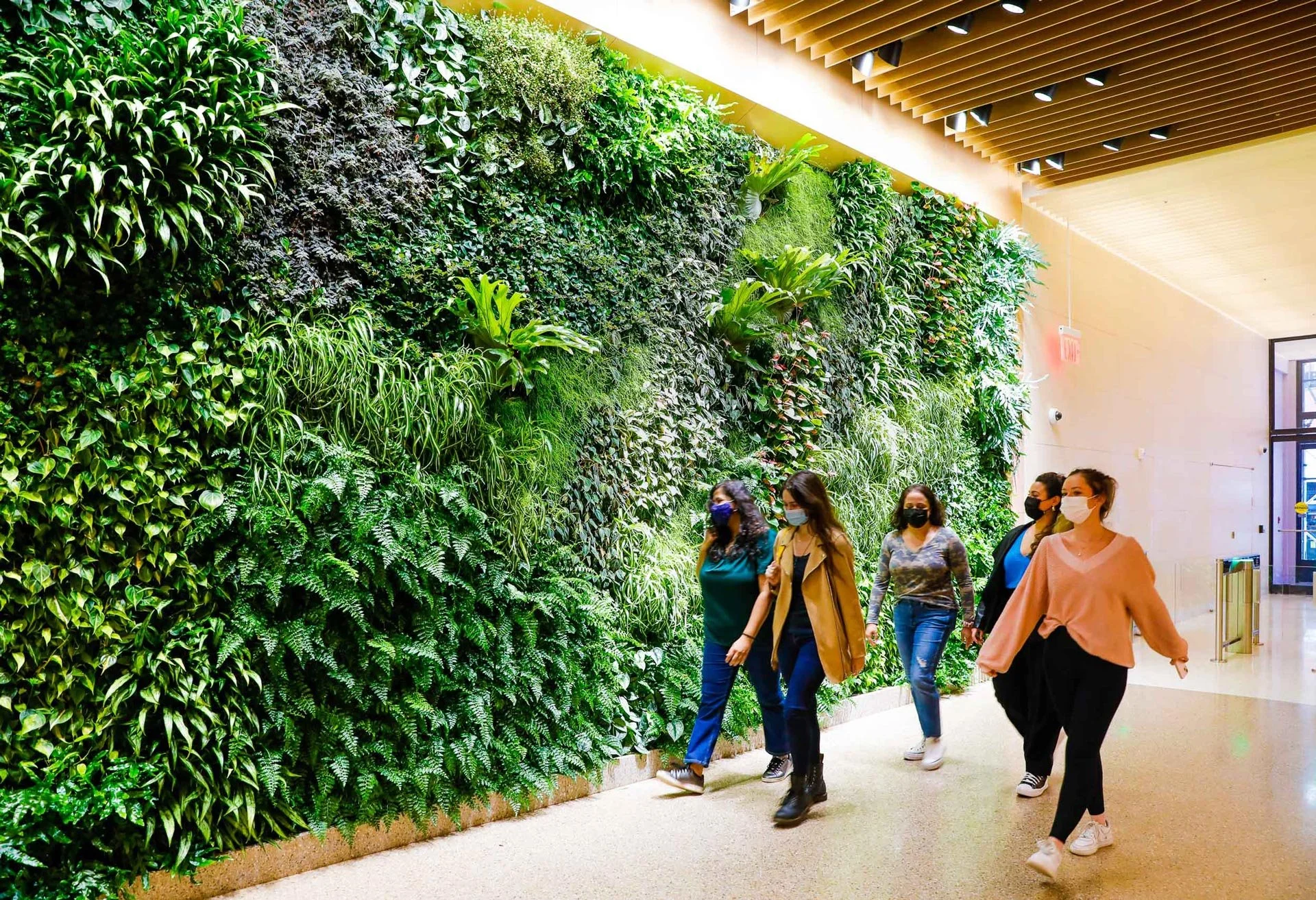
Modular Living Plant Wall- NYU, Manhattan
NYU School of Global Public Health Living Wall
📍 NYU School of Global Public Health, Greenwich Village, Manhattan, New York, NY
Educational Institution · Sustainability & Wellness
New York University has long been a leader in urban sustainability, and the living wall at the NYU School of Global Public Health is a fitting expression of that commitment. As a visual focal point within one of New York City's most prominent public health institutions, this indoor vertical garden does more than simply beautify the space — it embodies the school's mission. In a building dedicated to studying the relationship between environment and human health, a thriving living plant wall is a daily, tangible reminder of nature's role in our wellbeing.
Research consistently demonstrates that access to living plant material in interior environments — what designers call biophilic elements — measurably reduces stress, improves concentration, and supports mental health. For students, faculty, and researchers working in the high-stakes field of public health, the green wall at NYU functions as both a statement of institutional values and a genuine wellness resource built into the fabric of the building.
Living walls in educational and institutional settings across NYC
NYU's installation is part of a broader trend of universities and institutions in New York City incorporating vertical gardens into their built environments — recognizing that the quality of indoor spaces has a direct and measurable impact on the people who inhabit them. For those exploring biophilic design in New York educational institutions, or simply visiting the Greenwich Village campus, this living wall is worth experiencing firsthand.
At an institution dedicated to the science of human health and wellbeing, a thriving indoor living wall is more than decoration — it's a living demonstration of biophilic design principles in action.
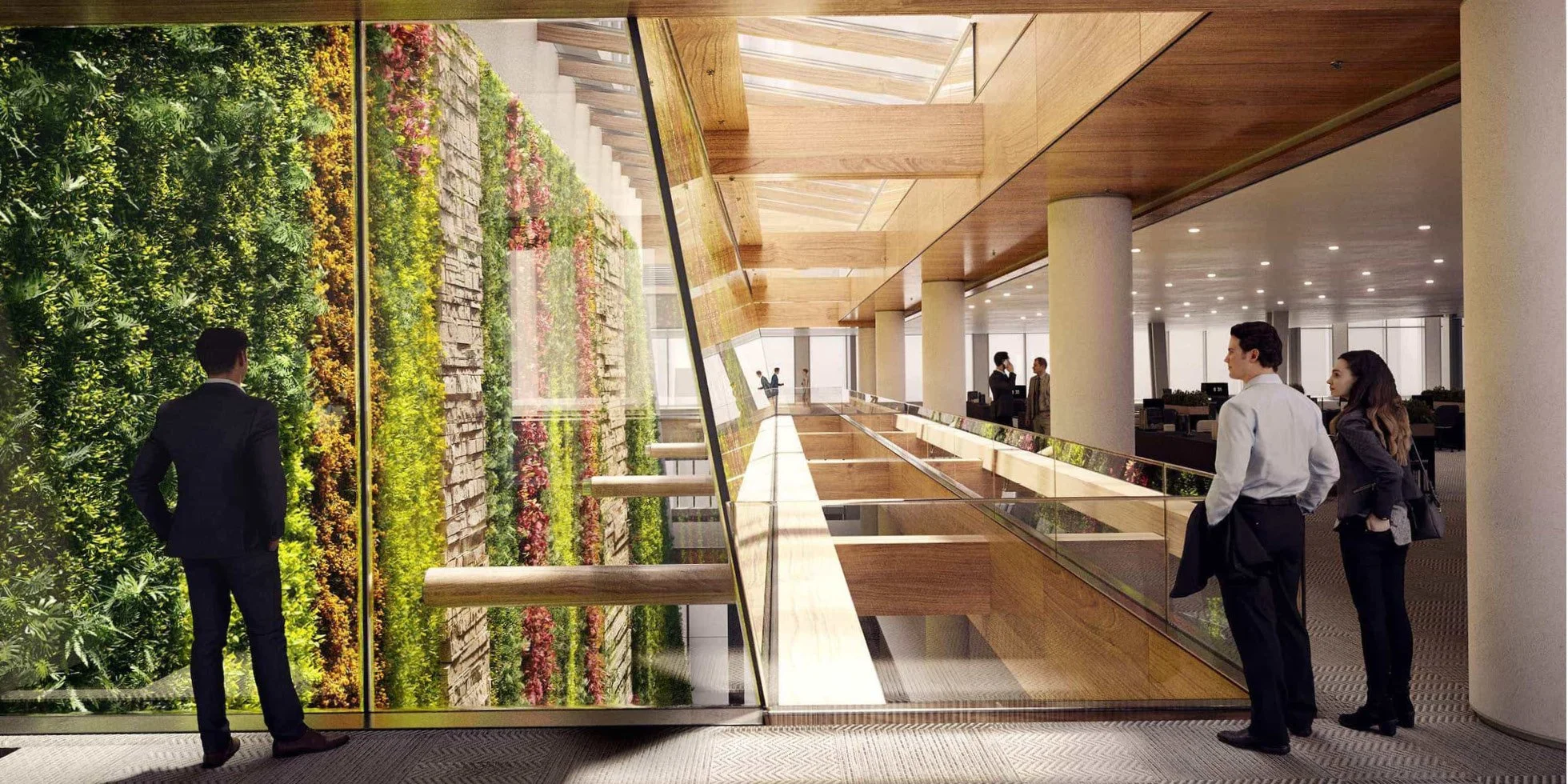
60 Wall Street Living Wall
📍 60 Wall St, Financial District, New York, NY 10005
Felt-Based Geoponic System · Opening Soon
The Financial District is about to get a whole lot greener. The forthcoming living wall at 60 Wall Street will bring a felt-based geoponic vertical garden system to one of New York's most storied business addresses — steps from the New York Stock Exchange, Charging Bull, and the rest of the iconic Lower Manhattan financial district. This project promises to be a major green landmark in a neighborhood better known for glass towers than greenery.
The choice of a geoponic felt system signals serious botanical ambition. These systems support greater plant diversity and visual depth than conventional tray-based approaches, and they perform particularly well in interior commercial environments where creating a genuine sense of nature is the goal. When complete, the 60 Wall Street green wall is expected to feature a diverse array of plant species designed specifically to thrive in the urban microclimate — providing a genuinely refreshing contrast to the surrounding Financial District concrete jungle.
A new green landmark for the NYC Financial District
When complete, the 60 Wall Street installation is poised to become one of the most visible living plant walls in the Financial District and one of the most talked-about new vertical garden installations in NYC — a signal that even the city's most traditionally corporate neighborhoods are embracing the green wall revolution.
Watch this space: 60 Wall Street's forthcoming geoponic living wall by Habitat Horticulture will bring world-class vertical garden technology to the heart of the NYC Financial District — one of the most anticipated new green wall installations on the East Coast.
Frequently Asked Questions About Living Walls in NYC
What is a living wall, and how is it different from a vertical garden?
The terms living wall, vertical garden, green wall, and plant wall are often used interchangeably. All refer to a permanent installation of living plants on a vertical surface, either indoors or outdoors, and typically featuring an automated irrigation system. The key distinction from a simple trellis or climbing vine system is that living walls use an engineered support structure (such as felt panels, modular trays, or hydroponic frames) to hold plants in place and deliver water and nutrients directly to the roots.
What living wall technologies are used in New York City?
The NYC installations featured in this guide use three main technologies: felt-based geoponic systems (as seen at Devoción, Lincoln Center, and the upcoming 60 Wall Street installation), modular plastic tray systems (used at Innisfree and the 151 W 42nd Street food hall), and proprietary cold-climate systems (Sempergreen's technology at Liberty Park Plaza). Each has distinct advantages depending on the budget, plant palette, and maintenance requirements.
What is a felt-based geoponic living wall system?
A geoponic felt system uses layers of engineered felt as the growing substrate. Plant roots grow directly into the felt, which is kept moist by an irrigation system. These systems are lightweight, water-efficient, and support a wide variety of plant species — making them popular for high-design indoor living walls in commercial and hospitality settings across New York City and beyond.
Where can I see living walls in New York City?
This guide highlights ten living wall locations across NYC: Liberty Park Plaza (Lower Manhattan), Innisfree flagship (Midtown), Devoción Coffee (Williamsburg, Brooklyn), Lincoln Center at 61 W 62nd St (Upper West Side), the food hall at 151 W 42nd St (Midtown), 152 Elizabeth Street (Nolita), One Manhattan Square (Lower East Side), 685 Third Avenue Pocket Park (Midtown East), NYU School of Global Public Health (Greenwich Village), and the coming-soon installation at 60 Wall Street (Financial District).
Do living walls improve air quality in New York City buildings?
Yes. Indoor plant walls and vertical gardens filter airborne pollutants, release oxygen, and can reduce volatile organic compounds (VOCs) in enclosed spaces. They also contribute to acoustic dampening — absorbing ambient noise — which makes them especially valuable in high-traffic commercial environments like food halls, retail stores, university buildings, and office lobbies across New York City.
New York City's Living Wall Revolution
From the Financial District to Williamsburg, from Midtown's busiest food halls to one of the world's great cultural campuses, living walls and vertical gardens are quietly transforming how New York City relates to the natural world. These installations range from the record-setting residential green wall at 152 Elizabeth Street to the intimate botanical depth of Devoción's café green wall in Brooklyn, to the coming green landmark at 60 Wall Street in the heart of the Financial District.
What unites all ten is a shared conviction: that cities are better, healthier, and more human when living plants are woven into their architecture. Whether you're an architect exploring biophilic design for your next NYC project, a traveler hunting down the city's most beautiful green walls and vertical gardens, or a business owner curious about living wall installation in New York, these ten installations represent the state of the art and a sign of where sustainable urban design is heading.
For architects and designers, reach out to info@lilyscottdesigns for a free consultation for your next green wall project.